30.09.2026
Beata Gruś
The power of habit in farmers’ purchasing decisions – why do we choose what we know?
The farmer makes purchasing decisions under conditions of high variability. The yield of production depends on the weather, the prices of agricultural products, the costs of production inputs, the pressure from agronomists, and the condition of the crops. In such an environment, prior experience becomes one of the most important reference points when choosing a new employer. If a product has proven its worth in a specific farm, its re-purchase requires less decision-making commitment. Similarly, production technology works in the same way. The proven treatment scheme can be repeated not because the farmer ignores new solutions, but because he knows its effectiveness and the level of risk.
It is here that the power of habituation comes into play. In purchasing decisions, the farmer does not compare only products, but also new solutions with his own experience, current technology, and recommendations from people he trusts.
In this context, „habituation” does not mean an automatic or reflexive choice. It is an acronym encompassing previous experience, familiarity with the solution, trust, and perceived risk of change.
Farmers’ purchasing decisions begin before the purchase
The farmer’s decision-making process does not begin with the store shelf or the product page. First, a need, problem, or investment plan arises. Then the farmer begins searching for information, comparing solutions, and verifying their reliability. The purchase is the final point of the decision-making process, not a single contact with the brand.
This path is analyzed by PLUSAGRI COMDEX 2026, implemented by Martin & Jacob. The project covers the areas of SEARCH, AI, TRUST, VERIFICATION and DECISION, which means information search, the use of artificial intelligence, trust, verification and the transition to decision-making. The design of the study shows the direction in which farmers’ purchasing behavior should be analyzed today as a multi-stage process, rather than a simple reaction to advertising.
COMDEX 2026 combines CAWI research, FGI qualitative research, and analysis of the behavior of the agro community. The full results will be presented at the PLUSAGRI conference on November 18, 2026. The very design of the study shows that the modern shopping journey requires an analysis of both sources of information and mechanisms for building trust.
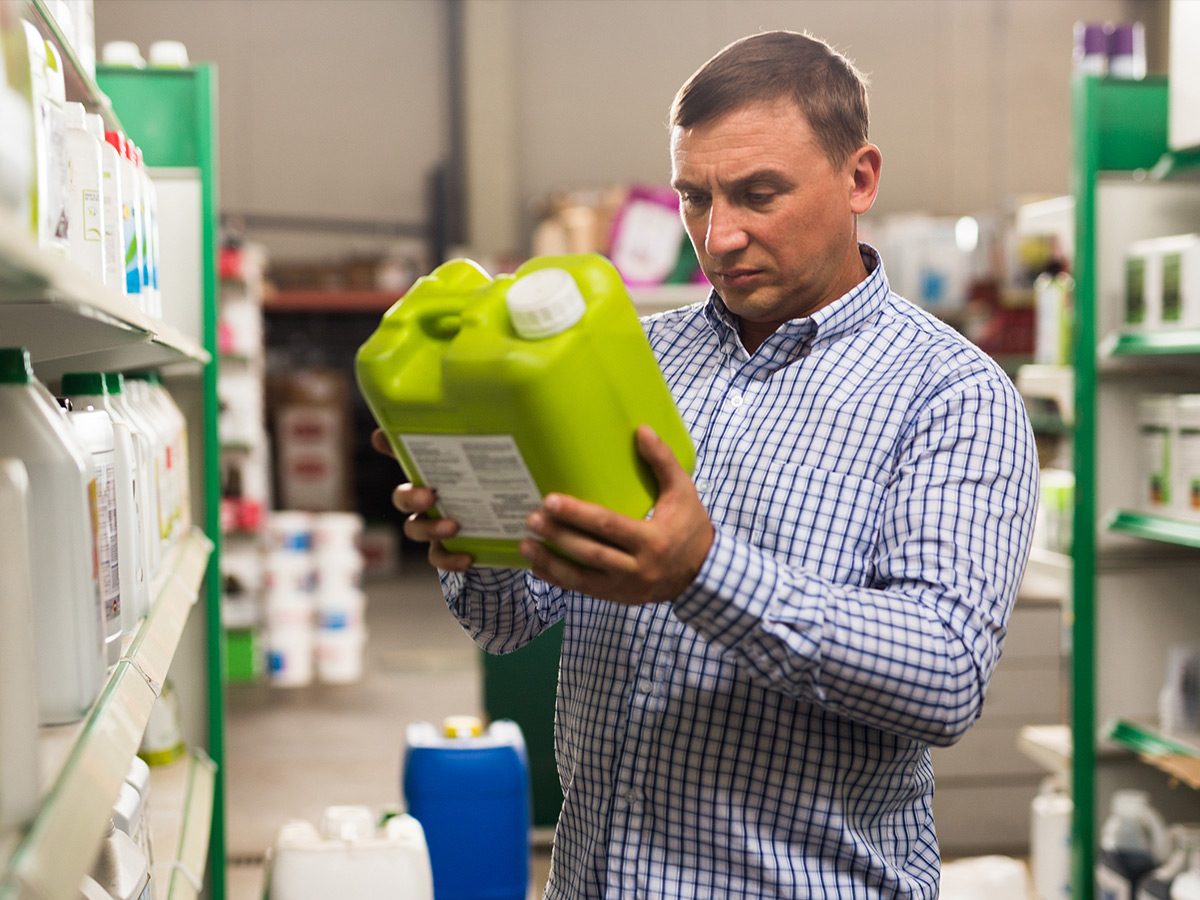
Why does a farmer choose a product that he already knows?
One of the most important points of reference is one's own experience. A farmer knows the product not only from marketing communication, but also from its actual use under specific farm conditions. His own result from last season is proof for him that advertising cannot fully replace that result.
The farmer remembers the effect of the treatment, the method of application, the reaction of the crop, and the cost-to-result ratio. He or she also remembers situations where the product did not meet expectations. Each season thus builds its own database of experiences, which influences subsequent decisions.
As a result, when purchasing again, you do not have to go through the entire process from scratch. The product is already known, tested, and established in farm practice. Knowledge of the solution lowers the barrier to entry and shortens the decision-making process.
Knowing the solution can simplify the next decision
If a solution is known and previously evaluated as effective, a reassessment of it may require less time than the analysis of a completely new proposal. Knowledge can therefore constitute a significant competitive advantage.
This does not mean that a well-known product is automatically the best solution. It does mean that a brand with which the farmer has had positive previous experiences starts with a level of trust that has already been built. The new competitor must first build the credibility that the current provider already possesses.
The experience of a farmer versus the novelty
The new product does not yet have its own capital of experience in the farm. It therefore needs to be noticed, considered, verified, and accepted. Each subsequent stage means that it is necessary to break through part of the barrier of change.
The farmer can check the label, the parameters, the results of experiments, user reviews, a consultant’s recommendation, or the seller’s recommendation. He or she can also compare the solution with the product used up to now. The novelty therefore needs not only visibility, but above all credible confirmation.
This is the crucial difference between awareness and the buying decision. Just knowing the brand does not mean that you are ready to buy. A brand can be recognizable, but at the same time not have a sufficient level of trust for the farmer to change their current choice.
The experience of a neighbor as a social confirmation
One pillar of the decision-making process is one’s own experience. The other is the experience of other farmers. A neighbor, a known producer, a member of a trade group, or a forum participant can serve as a social confirmation. The farmer receives information not only about the product, but also about how the solution worked in the practice of another farm.
This is especially important in the case of new products. The farmer does not yet have any experience of their own, so they may seek confirmation from other users. The recommendation of another farm can shorten the path from interest to testing.
The „Innovations in Agriculture” study, conducted in 2017 by Martin & Jacob in collaboration with AgroFoto.pl on a group of 451 owners or co-owners of farms, showed a diverse pace of adoption of new solutions. Some of the surveyed quickly embraced innovations, others needed more time, and some remained outside the adoption process. The agricultural market is therefore not a homogeneous segment in terms of its readiness for change.
„Agriculture is a sector of the economy that is perhaps the most susceptible to external factors and very unpredictable. It can be assumed that turbulence and dynamics make it downright chaotic and fraught with risk. The only constant in chaos and this risk is one’s own experience and the recommendation of other farmers. Therefore, although every farmer is highly prone to taking risks, they try to reduce them by choosing sources of information of the highest trust. The repeatability of certain situations builds trust in the product, which need not be physically linked to the characteristics of that product. Sometimes even super good seasons are enough to believe that something is working, and that’s already a classic case of illusory correlation.”
— Marcin Chrobot, co-founder and CEO of Martin & Jacob
 „Agriculture is a sector of the economy that is perhaps the most susceptible to external factors and very unpredictable. It can be assumed that turbulence and dynamics make it downright chaotic and fraught with risk. The only constant in chaos and this risk is one’s own experience and the recommendation of other farmers. Therefore, although every farmer is highly prone to taking risks, they try to reduce them by choosing sources of information of the highest trust. The repeatability of certain situations builds trust in the product, which need not be physically linked to the characteristics of that product. Sometimes even super good seasons are enough to believe that something is working, and that’s already a classic case of illusory correlation.”
 For agricultural marketing, this means the need to segment not only by farm size or production profile, but also by willingness to adopt. An early adopter needs a different communication, and a farmer who expects confirmation from several sources before making a change needs a different one.
The seller's recommendation still matters
The digitization of the purchasing path has not eliminated the influence of the seller and advisor on farmers’ purchasing decisions. The seller can actively shape the product selection, especially when the farmer comes with a specific need but does not yet have a specific solution. The farmer can look for a product to solve a specific problem and ultimately leave the store with a solution suggested by the seller. In this model, recommendation does not solely serve as an informational function. It becomes one of the factors that directly influence the final purchasing decision. For a brand, this means that their presence in communication with the farmer should be complemented by working with the sales channel and the people involved in product selection.
However, the recommendation does not operate in isolation from other sources. The farmer can compare it with his own experience, the opinion of a neighbor, information from the internet, or materials from the manufacturer. The purchasing decision is the result of the confrontation of many signals, not just one sales message.
This is an important proposition for agri brands. If brand communication is limited to product messaging, it leaves a large portion of the decision-making process outside of their control. The brand should provide arguments at every stage of the decision-making process: from searching for information to verification and re-purchase.
Habit also influences the choice of treatment technologies
The power of habit does not only apply to products. It can encompass the entire technological scheme. A farmer can repeat the order of procedures, the deadlines, the solutions applied in the individual phases, and the way decisions are consulted. This mechanism can be particularly pronounced in fertilization, where established plant nutrition programs often include the selection of fertilizer, application deadlines, doses, and the way to respond to the course of the season. If the given scheme has proven itself on the farm, changing it means a need to reassess the entire fertilization strategy. As a result, it does not involve a single purchase, but an entire model of the farm’s operation.
The scheme can be very simple: problem, consultation, purchase, procedure, observation of the effect, and evaluation. If the result meets expectations, the starting point for the next season remains the same. The experience from the previous season serves as a basis for the next technological decision.
In this mechanism, the re-purchase of the same product or solution is particularly interesting. The re-purchase does not always require a re-building of product awareness. If the previous experience was positive, the brand can enter the next season with a capital of trust.
Repetition of procedures as a result of a fixed routine
In agro marketing, it is worth looking at the purchase from a broader perspective than through the prism of a single product. The product can be part of a larger technological program, and its use can be linked to other decisions. Repetition of procedures can therefore result from a fixed technological pattern, and not solely from attachment to a specific brand.
The mechanism can be presented as follows:
need → search for information → recommendation → purchase → use → observation → evaluation → repeat purchase |
Each subsequent season provides new data for this cycle. The more positive experiences there are, the stronger the effect of solidifying the earlier decision can be.
For a competitive brand, this means a concrete barrier to entry. It is not enough to convince the farmer that the new product has good parameters. We still need to show why it is worth changing the solution that is already embedded in its technology.
Why is it difficult to change a habitual purchasing pattern?
Changing a fixed solution means that the farmer must reassess the risk. A well-known product already has confirmation in the practice of farms. The farmer knows its action, method of application, and expected effect. The new solution does not yet have such experience. Therefore, the information about the product alone is often not enough to change the current choice. Recommendations from other farmers, a report from the seller, and experience with the entire technological scheme are also important.
Table 1. Examples of barriers to changing the solution in a farmer’s purchasing process
| Barrier of change | The mechanism on the farmer's side | The brand's communication needs |
| Lack of own experience | Unknown effect under farm conditions | Data, tests, user experiences |
| Well-known product | Low level of uncertainty | Concrete argument for change |
| Recommendation from other farmers | Social confirmation of the existing solution | Credible case studies |
| Trust in the seller | A lasting relationship | Competent contact and advice |
| The risk of a decision | Fear of the cost of making a mistake | Evidence, data, and reducing uncertainty |
| Established technology | A repetitive treatment regimen | An argument referring to the entire process |
The new brand therefore competes not only with the product of the competition, but with the entire ecosystem of experiences, relationships, and habits. Effective communication should therefore address specific barriers to change. Data and tests build credibility, and user experiences provide social validation. In turn, advice helps translate product parameters into business practice. The greater the risk of perceived change, the more important concrete evidence of its value becomes.
Trust reduces perceived risk
In agriculture, the purchasing decision often concerns a product whose effect is directly linked to production. Therefore, the brand must reduce not only informational uncertainty but also perceptual risk. The farmer must recognize that the new solution is reliable enough to be worth leaving the familiar scheme behind.
In this process, the consistency of communication is crucial. If the advertising message differs from expert information, user experiences, or recommendations from the seller, there is friction in the decision-making process. Trust is built when different points of contact between the brand convey a coherent message.
The farmer does not reject the new. He needs an argument for change
It would be simplistic to state that farmers are reluctant to adopt new products. The „Innovations in Agriculture” study, conducted in 2017 by Martin & Jacob in collaboration with AgroFoto.pl on a group of 451 farm owners or co-owners, showed a diverse pace of adoption of new solutions. There are both quick adopters of new innovations on the market, as well as farmers who need more time to gather experience, compare results, and mitigate the risk of decisions. Therefore, the willingness to implement innovations is not uniform, so brand communication should take into account different levels of openness to change.
The novelty itself does not have to be a barrier; it can be the lack of a reason strong enough to make a change. The new solution should address a specific problem and provide an argument that the farmer can apply to their own production conditions.
From a marketing perspective, this means a shift from communication „we have a new product” for communication „we have a solution to a specific problem”. The value for the recipient must be embedded in its production context, and not solely in the product's parameters.
How can agricultural marketing break the power of habit?
A brand that wants to change a fixed choice should be present before the moment of purchase. The key becomes the management of the entire decision-making journey: from the initial search for information, through education and reliable evidence, to the sales contact.
Table 2. Purchase decisions of farmers. The role of brand communication in the subsequent stages of the farmer’s purchase journey
| The stage of the shopping journey | The farmer's question | The task of communication |
| Recognizing the need | What problem do I have? | Naming the need in terms of the economy |
| Searching for information | What are my options? | Visibility in the search engine and industry media |
| Evaluation of the solutions | How are the solutions different? | Comparisons, data, and expert content |
| Verification | Can I trust this? | Evidence, user experiences, and experts |
| Making a decision | Is it worth changing the current solution? | Specific business or technological argument |
| Purchase | Where and how to buy? | Distribution and simple contact |
| Experience with the product | How does the solution work in the farm? | After-sales service and support |
| Re-purchase | Will I return to this solution? | Retention and long-term communication |
Therefore, it is worth designing the communication at the next stages of the decision-making process, rather than limiting it to a single sales campaign.
The farmer's purchasing decision is a process, not a single contact
In agricultural marketing, it is easy to focus on the last point of the path, which is conversion. Meanwhile, the farmer may encounter the brand many times before making a decision. Any contact can increase familiarity, build trust, or provide an argument for verification.
„The farmer’s purchasing decision is rarely influenced by a single communication or a single offer. It is a process in which experience with the product, recommendations, access to reliable information, and a relationship with the advisor gradually reduce the perceived risk of change. In conditions of variable production, the farmer naturally returns to solutions that he knows work and can relate to his own farm.”
— Jacek Kwiatkowski, President of the Board of Directors of Adagri Sp. z o.o.
 „The farmer’s purchasing decision is rarely influenced by a single communication or a single offer. It is a process in which experience with the product, recommendations, access to reliable information, and a relationship with the advisor gradually reduce the perceived risk of change. In conditions of variable production, the farmer naturally returns to solutions that he knows work and can relate to his own farm.”
 From a marketing strategy perspective, this means moving away from focusing solely on conversion. The brand should also measure the quality of touchpoints, engagement, returning users, and the ability of the communication to guide the recipient through the next stages of the decision-making process.
Adopting new solutions does not happen the same way for everyone
The different pace of adoption of innovations has a direct impact on communication. The fast-paced farmer who is testing new developments first needs access to information and the ability to test the solution. The more cautious farmer may need additional evidence, recommendations, and confirmation from several sources.
— Marcin Chrobot, co-founder and CEO of Martin & Jacob
For marketers, this means the need to tailor communication to the adoption stage. Not every recipient needs the same argument, the same format, or the same level of detail.
AI can change the way we seek information, but it does not eliminate the importance of experience
AI can become the next entry point into the farmer's information path. The farmer can use generative tools to search for and organize information or compare solutions. If this is the case, there is no need to verify the answers obtained.
PLUSAGRI COMDEX 2026 analyzes AI alongside traditional sources of information, as well as issues of trust and verification. For brands, this may mean the need to think not only about visibility in the classic search engine, but also about how brand and product information function in a generative AI environment.
A farmer using AI can then compare the answer with a consultant, a salesperson, or their own experience. AI can therefore enter the decision-making process as a new source of information, but the decision can still go through the trust and business practices filter.
Habit is part of the decision, not its opposite
Farmers' purchasing decisions are based on experience, relationships, and memories from previous seasons. The farmer does not start every decision with a blank sheet of paper. He has his own observations, proven solutions, the opinions of other farms, and relationships with sellers or advisors.
Therefore, the habit can influence both the purchase of a product and the repetition of entire technological schemes. One decision can create a reference point for the next one, and a positive experience can strengthen retention and the tendency to make repeat purchases.
For agro brands, this means a change in perspective. It’s not enough to answer the question of how to increase sales of a specific product. It is necessary to understand why a farmer chooses a solution they already know, who they trust, and what information may prompt them to reassess the available options.
It is precisely at the intersection the search for information, experience, trust, evidence, and decisions a modern farmer's shopping route is being created. A brand that wants to change entrenched behavior must first enter that path and understand the mechanism that sustains the current choice.
On the agricultural producers' purchasing decisions at PLUSAGRI 2026
The topic of purchasing decisions, trust, and the role of AI in agriculture will be one of the areas discussed during the conference. PLUSAGRI 2026 – Agricultural Marketing Communication Forum. The conference will take place November 18, 2026 in Warsaw and will bring together representatives of agro, marketing, technology companies, and experts analyzing the changes taking place in the agricultural market. One of the important topics of the event will be how the farmer’s path changes from seeking information to making a specific decision.
The program will also include a presentation of the results. PLUSAGRI COMDEX 2026, The Martin & Jacob study on informational and decision-making behaviors of farmers. The project analyzes five areas: SEARCH, AI, TRUST, VERIFICATION, and DECISION. COMDEX is meant to show where farmers look for information, how they use AI, which sources they trust, and what happens between finding information and making a decision.
For agro marketers, this is an important perspective, because the mere presence of a product in communication does not yet guarantee a purchase. The brand must be present in the places where the farmer seeks information, verifies recommendations, and compares the new solution with the one they already know.
Return to all entriesMore inspiration
Marketing to farmers – 7 mistakes limiting campaign effectiveness
 Read more
AI in agricultural marketing. How are farmers' decisions changing?
Read morePLUSAGRI 2026 Agricultural Marketing Conference – why communicating with a farmer requires a new approach today?
Read moreBrand or price? What sells tractors in an era of tightening belts?
Read moreChatGPT Ads are now in Europe. Are ads in ChatGPT available for the agricultural sector?
Read moreSustainable agriculture as a source of competitive advantage in agribusiness
Read more



We have been connecting agro brands with farmers for over 20 years.
Talk to us about your campaign and start reaching the right audience.
Contact Us