14.10.2026
Beata Gruś
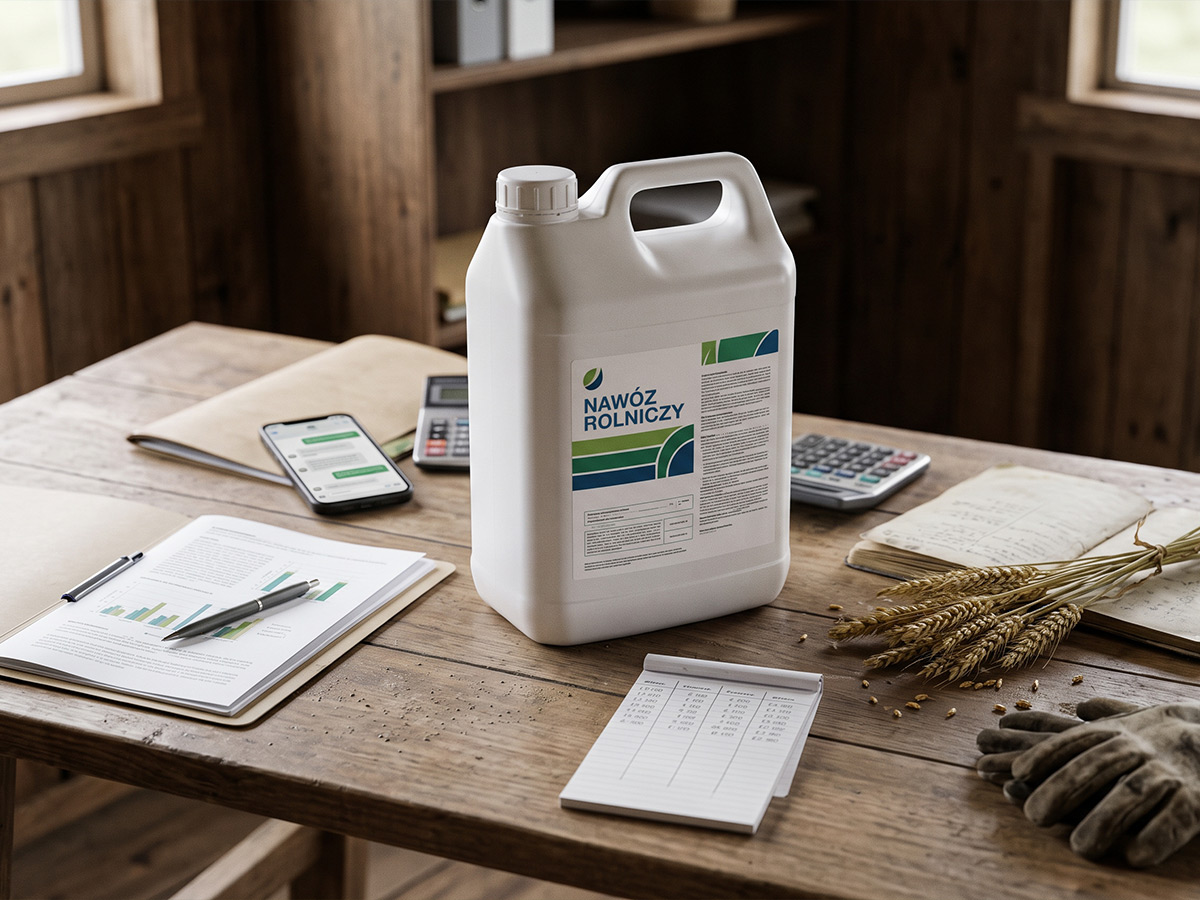
One brand, several worlds – why do a manufacturer, a distributor and a farmer see the same product differently?
The manufacturer of plant protection products talks about the formulation, active substance and the results of the experiments. The distributor analyzes the product's place in the portfolio, its rotation and sales potential. The farmer asks whether the solution will work under his conditions and whether the cost of the treatment will be justified. Everyone evaluates the same product, but they answer different questions.
This is an important challenge for agricultural marketing. A brand’s one, consistent promise must be translated into useful arguments in the subsequent stages of the journey to the customer. Repetition of the same product card in every channel does not provide such a translation.
Three perspectives, three criteria of value
The value of a product in the agro industry is not evaluated in the same way by all market participants. The manufacturer focuses on technological superiority and its confirmation; the distributor and retailer assess the sales potential of the solution, and the farmer checks whether it meets the needs of his farm. Each of these perspectives influences the purchasing decision, which is why effective communication should take into account different evaluation criteria and questions that the recipients seek answers to.
Table 1. Criteria for evaluating the value of a product from the perspective of the producer, distributor, and farmer
| Participant of the market | What is he looking at? | What question is he asking? |
|---|---|---|
| Manufacturer | Technology, positioning, proven product advantage | What distinguishes our solution and how can it be proven? |
| Distributor and retailer | Location in the offer, availability, margin, turnover and sales arguments | To whom, when, and why is it worth offering this product? |
| Farmer | Adaptation to the plantation, risk, cost of the procedure, and expected effect | Is this the right choice for my farm? |
This division organizes the dominant needs, but does not describe rigid roles. The producer knows the market needs, the distributor often provides advanced advice, and the farmer does not solely base his decision on calculation. His decision is also influenced by previous experiences, trust in the brand, recommendations, and the fear of changing a proven technology.
Manufacturer: technological advantage must have practical significance
The development of a product requires research, field experience, determination of the conditions of use and – where required – a registration process. It is therefore natural that the manufacturer builds the message around the composition, formulation, mechanism of action or test results.
However, the presentation of the parameters alone does not answer the question of what the given property actually changes in practice. In fertilization, it is not only the concentration of the elements that is important, but also how they fit into the needs of the crop, the soil availability, and the fertilization program. In plant protection, the importance includes the scope of action, the timing and conditions of the treatment, and the place of the product in the overall technology – in accordance with its permitted use.
„The producer looks at the product through the lens of technology and parameters, but the farmer looks at it through the lens of the situation on his field. Effective communication should combine these two perspectives and show where a specific technological advantage actually matters.”
— Jacek Kwiatkowski, President of the Board of Directors of Adagri Sp. z o.o.
 „The producer looks at the product through the lens of technology and parameters, but the farmer looks at it through the lens of the situation on his field. Effective communication should combine these two perspectives and show where a specific technological advantage actually matters.”
 Distributor: the product must find its place in the offer and the sales conversation
For a distributor, a new product is not an isolated innovation. It competes for the attention of retailers, a place in the offer, and the customer’s budget. Its seasonality, availability, profitability, and relationship to products already sold are important. Even a valuable technological feature will not automatically become a selling point.
Therefore, materials for the sales team should not only summarize the technical documentation, but also indicate the groups of households, typical application situations, limitations, and ways to justify the advantage. Otherwise, each representative may independently define positioning – one by price, another by composition, and a third by availability. As a result, the brand is presented inconsistently.
Farmer: the decision concerns technology, not a position in the catalog
The farmer analyzes the product in the context of the crop structure, the state of the plantations, the pressure from agronomists, the weather, equipment, and work schedules. Two solutions with similar purposes can generate a different cost per hectare due to the dosage, application conditions, or location within the overall protection or fertilization program.
But even a reasonably economically sound proposal does not always win out against a solution already known. Experience from previous seasons, trust in the advisor, and a desire to limit risk are all of real importance. Communication must therefore provide not only the promise of benefits but also credible reasons for a farmer to reassess their previous choice.
— Jacek Kwiatkowski, President of the Board of Directors of Adagri Sp. z o.o.
One fungicide, three ways to present the value
Imagine the hypothetical introduction of a fungicide into cereals. It is not about creating three different promises or attributing unconfirmed properties to the product. The starting point is the same, documented data and an approved scope of use. The selection of information and the purpose of the material are changing.
| The recipient | The main message | Example material / purpose |
|---|---|---|
| Manufacturer / Brand | Mechanism of action, confirmed parameters, results of experiments and limitations. | Expert material: justify positioning. |
| Distributor / retailer | For which farms and situations the product may be suitable; what justifies its role in the portfolio. | Business conversation guide: to facilitate the appropriate recommendation. |
| Farmer | What problems on the plantation can be solved when considering its use and how to estimate the cost of the procedure. | Article or educational material: to help assess its usefulness. |
The greatest benefit from such architecture does not come from the number of formats, but from the consistency of the buying journey. If advertising sparks interest but the retailer cannot explain who the product is suitable for, part of the campaign’s effect may be lost. Similarly, if the marketing promise does not correspond to the later recommendation of the advisor, trust in the brand is weakened.
How to design coherent communication?
A good basis is a logical sequence:
| product characteristics → mechanism of action → conditions of use → possible agronomic effect → economic significance. |
Not every element can be reduced to a single universal number. The effect requires evidence, and cost-effectiveness depends on the conditions in the farm. The task of marketing is to organize this information, not replace documentation, product labels, or professional agronomic recommendations.
At the stage campaign planning It is worth answering four questions: what advantage can be confirmed; for whom is it important; who influences the decision and at what stage; what materials and channels will help move to the next step? This approach allows the use of a common knowledge base in multiple formats without blurring the positioning.
Error costs more than an inconsistent message
Communicating the same message to everyone can be convenient organizationally, but it can limit the effectiveness of the entire process. The producer funds the building of interest, the distributor does not receive useful arguments, and the farmer does not find an answer to the question regarding his own field. Each element of the campaign can look correct in isolation, although a gap appears between them.
Therefore The effectiveness of agro marketing It is worth evaluating not only by the range of materials or traffic on the website, but also by whether the interest translates into quality inquiries, sales conversations, and appropriate recommendations. The scope of measurement depends, of course, on the available data and the possibilities for cooperation with the sales channel.
One brand, several worlds – one coherent direction
A brand does not need different identities for a producer, distributor, advisor, and farmer. It needs one, documented value proposition, and communication tailored to the role of the recipient. Good agricultural marketing combines technological knowledge with commercial arguments and the realities of the farm. Only then does the product stop being just another item in the catalog and becomes a solution that the recipient can consciously evaluate for its usefulness.
Return to all entriesMore inspiration
The Ministry is still debating the electronic record of spraying, and farmers are already sowing. Who thought of a field work calendar?
 Read more
The power of habit in farmers’ purchasing decisions – why do we choose what we know?
Read moreMarketing to farmers – 7 mistakes limiting campaign effectiveness
Read moreAI in agricultural marketing. How are farmers' decisions changing?
Read morePLUSAGRI 2026 Agricultural Marketing Conference – why communicating with a farmer requires a new approach today?
Read moreBrand or price? What sells tractors in an era of tightening belts?
Read more




We have been connecting agro brands with farmers for over 20 years.
Talk to us about your campaign and start reaching the right audience.
Contact Us