Google Ads for Agribusiness
Farmers are increasingly starting the buying process from the search engine. They check prices, parameters, reviews, availability, and the solution to a specific problem or the name of a product they already know. Google Ads allows them to appear at this very moment – but effectiveness depends on whether the campaign understands the intent, the season, and the value of a specific query.
At Adagri, we have been running Google Ads campaigns for over a decade and are a Google Partner. We combine the platform's tools with knowledge of the agro market, analytics, and FARM AI™. We treat Google Ads as part of a broader agricultural marketing system, not a separate advertising panel.

Not every search means the same level of readiness to buy.
Someone typing in the name of a pest may only be seeking information. The user asking for a method of control, a specific product, a label, a price, or a place to purchase is much closer to a decision. This distinction has a direct impact on the structure of the campaign and the bids.
The agro campaign analyses published on the Adagri blog show that precise long-tail phrases and brand queries can generate significantly better click-through rates than very broad keywords. That’s why we don’t start with the largest volume. We start with intent and business potential.
Types of Google Ads campaigns in agriculture
Search Ads - we capture existing demand
We launch search engine campaigns where the recipient is actively searching for a product or solution. We structure them according to categories, problems, brands, and decision stages, then analyze the search queries and systematically eliminate traffic that is of no value.
In agriculture, problematic, seasonal and product-related phrases are particularly important. The campaign for pesticides, seeds, machinery or financing requires a completely different model of keywords, target pages and schedule.
Performance Max - automation needs good data
Performance Max allows for broadcasting across multiple Google channels within a single campaign. The algorithm selects locations and combinations of content to achieve the specified goal. However, this does not mean that the system can be left unchecked.
In the agritech industry, the quality of the input data is of paramount importance: product feed, conversion signals, product distribution, creatives, asset groups, and information about the audience. A poorly built campaign can generate a lot of traffic, but not necessarily sales. That’s why we view automation as a driving force that needs to be fueled properly.
YouTube Ads - show a product that cannot be described in one sentence
Video works particularly well for machines, technologies, tests, demonstrations, and products that require explanation. We run in-stream, bumper, and performance video formats that can work both at the awareness level and at the next stages of the buying journey.
The video should be designed for advertising. The first seconds must quickly show the context, the product or the problem, and the rest of the video must provide a reason for the user to stay with the message.
Demand Gen - building interest before active search
Not every farmer types the product name into Google today. Part of the demand has to be built up beforehand. Demand Gen campaigns allow you to reach audiences with visual and video materials even before the moment of the direct purchase query.
This is especially important for new products, technologies, and services that the target audience has not yet heard of. In such a case, the campaign should first create a category of problem or interest, and only then capture demand in Search.
Google Shopping and sales campaigns
In e-commerce, we use product campaigns based on the feed in the Google Merchant Center. Before clicking, the user sees the photo, the name, and the price, so the traffic often has a higher purchasing intent.
The effectiveness of Shopping and PMax, however, depends not only on the campaign. It requires an organized feed, product data, availability, pricing, analytics, and a well-functioning store. That’s why we combine larger projects with the service. E-commerce for the agricultural industry.
Remarketing - the first visit rarely ends a longer buying process
With more expensive products, the farmer may return to the decision several times. He compares offers, consults the purchase with his family, partner, advisor, or dealer, and waits for the right investment moment. Remarketing allows him to continue the contact after the first visit to the website.
It’s not about repeating the same advertisement. The sequence can be developed: after the first contact, show the expert material, then the application, the user’s opinion, financing, or a specific offer. This way, the advertisement provides additional arguments instead of just reminding the brand name.
The type of Google Ads campaign and its role in the decision-making process
| Type of campaign | The main task | The stage of decision-making |
| Search | Capturing active demand | consideration / decision |
| Performance Max | Scaling leads or sales in the Google ecosystem | consideration / decision |
| YouTube | Demonstrating the product’s functionality, educating and building awareness | awareness / consideration |
| Demand Generation | Building interest before actively searching | awareness / interest |
| Shopping | Presentation of a specific product, photos and prices | decision / purchase |
| Remarketing | Continuation of contact after the first visit | consideration / decision |
Seasonality - the budget must work when there is demand
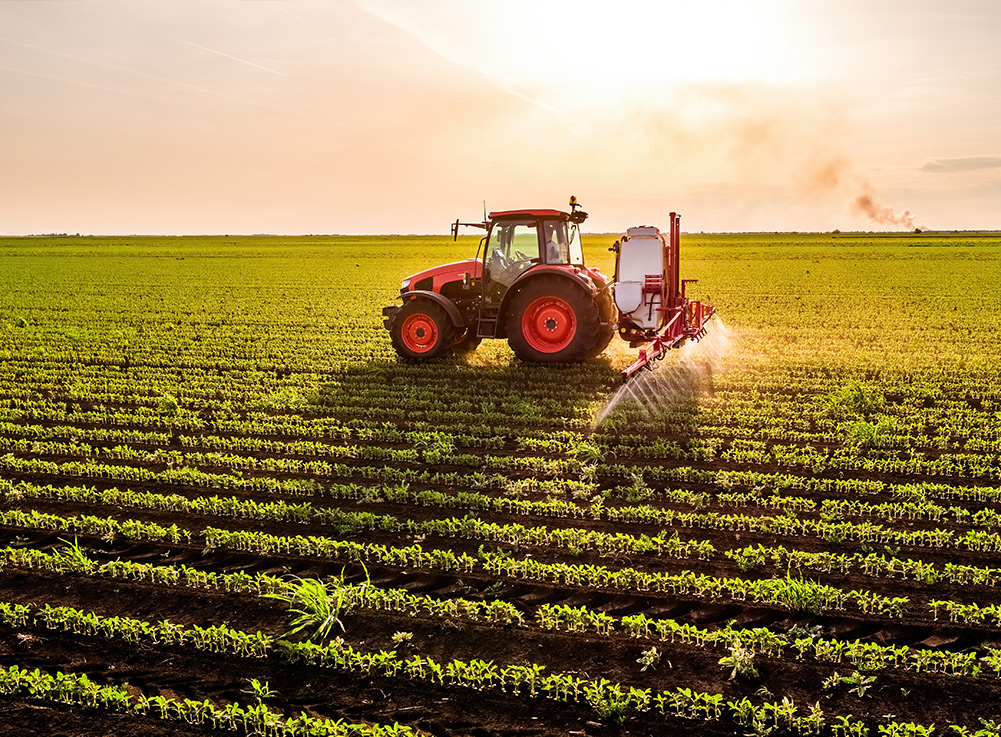
Agriculture has distinct demand windows. Seed, fertilizer, plant protection, spare parts, and machinery campaigns have different rhythms. To this are added weather, prices of agricultural products, subsidies, application deadlines, and local conditions.
That’s why we plan the budget and structure of the campaign so that the activities begin before the peak demand and can scale up at the right time. The campaign is only launched when the user needs the product immediately; often, it loses the awareness-building and comparison phase.
FARM AI™ - additional signals about the interests of farmers
Google has advanced algorithms, but it is not a system built specifically for agriculture. Therefore, in selected campaigns we use our proprietary solution. FARM AI™, Based on behavioral data about user interests and over 100 agricultural categories.
Such signals help to better target and optimize campaigns, especially when the platform's standard interest groups are too broad for a specific agro category.
The landing page is part of the campaign

Clicks are not the result. If a user lands on a page that does not find the answer from the ad, the campaign loses its potential. Therefore, we analyze the landing pages: the consistency of the communication, speed, mobile usability, visibility of the CTA, forms, content, and the path to conversion.
If necessary, we design dedicated landing pages for campaigns, allowing you to more precisely tailor the message to the segment, product, or specific promotion.
How do we measure effectiveness?
The indicator depends on the goal. For lead generation, we measure, among other things, the cost and quality of the query, the number of qualified leads, the number of forms and calls. In e-commerce, we look at revenue, ROAS, margin, cart value, and the cost of acquiring a customer. In awareness campaigns, we analyze, among other things, reach, frequency, views, and subsequent user behavior.
The most important thing is that the platform receives the right conversion signals. If we measure only clicks, the algorithm optimizes clicks – even if they have no business value.
How does running a campaign look like?
- Analysis of the target, product, season and historical data.
- Selection of campaign types and method of measuring conversions.
- Research on phrases, audiences, competition, and user paths.
- Preparing the structure of the campaign, ads, resources, and landing pages.
- Start-up, data control and elimination of inefficient traffic.
- Constant optimization of budget, rates, creatives, queries, and signals.
- Reporting of the business result and recommendations for further actions.
What do you get?
- Account analysis, historical data, product and season.
- A plan and structure for the campaign that is tailored to the goal and intentions of the users.
- Research on phrases, audiences, competition, and user paths.
- Setting or recommendations for conversion measurement within an agreed range.
- Ads, resources, and recommendations for landing pages.
- Constant optimization of budget, rates, inquiries, creatives, and signals.
- Reporting of the business result and recommendations for further actions.
Why Adagri?
- Google Partner status and over a decade of experience in running Google Ads campaigns.
- Specialization in the agricultural market and knowledge of seasonality and the agro category.
- FARM AI™ and your own data as an additional signal source for selected campaigns.
- The team combines media, analytics, design, content, SEO and development.
- Optimization for leads, sales, and real goals, not just traffic.
Most common questions
1. Which type of Google Ads campaign is best for the agro sector?
There is no one best type. Search well captures active demand, YouTube and Demand Gen build interest, Shopping supports e-commerce, and PMax can scale sales and leads across multiple channels. The choice depends on the product and the stage of the decision-making process.
2. Does a small budget make sense in Google Ads?
Yes, if the scope of the campaign is properly narrowed down. With a limited budget, it is especially important to focus on inquiries about high-intentions, priority products, and the most important region or season.
3. Can campaigns be conducted only seasonally?
Yes, but it is worth distinguishing the period of building demand from the period of direct sales. In many categories, the best effect is achieved through pre-season presence and increased intensity at the peak of demand.
4. Are you preparing the designs and landing pages?
Yes. The campaign can include ad text, graphics, video, and a design or optimization of the landing page. This ensures that the media and conversion point are consistent.
5. How quickly do the results become visible?
The first data appear immediately after launch, but optimization requires a sufficient number of conversions and time to collect information. The pace depends on the budget, season, search volume, and the goal of the campaign.
6. Do you run Google Ads for agricultural e-commerce?
Yes. We support Shopping, Performance Max, product feeds, and analytics. For larger stores, we combine campaigns with e-commerce audits and optimization of the purchasing process.
Show the ad when the farmer is really looking for an answer or a product.