03.11.2025
Jacek Kwiatkowski
Farm marketing: 5 pillars you can't forget in the age of AI.
The marketing industry has become enamored with artificial intelligence. The promise of automation, hyperpersonalization and unprecedented efficiency resonates in every conference room. In this technological rush, it's easy to believe that everything we knew is going away.
When we step out of the marketing parlors into the Polish countryside, we find that in agriculture - a business where a family's livelihood and multi-generational legacy are at stake - the AI revolution looks very different. Technology is and will continue to be a powerful tool, but the real game is still about something much older: trust.
Before we talk about AI, let's talk about the farmer
To understand why certain things remain constant, we must first understand the structure of the market itself. The data is unforgiving. According to the CSO's 2020 Census of Agriculture, farms of 100 hectares or more account for about 1% of the total number of farms in Poland. This means that advisors and sales representatives of concerns and distributors, while concentrating their efforts on the largest acreages, regularly visit only the statistical and strategic margin of the market. Admittedly, this small group of farms (of 100 hectares or more) manages a significant portion of the land - a total of approx. 3.45 million hectares, accounting for about 23% of the country's total agricultural land, is a very big piece of the overall pie, but who then advises the overwhelming majority of farmers? The answer has been the same for years: the man at the local store (well, and Uncle Google of course).
This is where the psychology of decision-making comes in. Agricultural producer This is primarily an entrepreneur managing quite a large risk. Of course, farmers who succumb to momentary trends and sow what happens to be of high price are not uncommon. However, they usually lose money when entering the business „on the upswing” and fall with the market correction. Farmers who plan for the long term win. However, even they face challenges such as a lack of infrastructure for storage, which forces many to sell their agricultural products when they are the cheapest.
On smaller farms, the situation is even more specific. A small to medium-sized farmer often still works full-time, and runs the farm after hours. What follows is that such a farmer has no time for experimentation. A treatment performed on a Saturday must be effective, because there will be neither time nor money for a repeat. That's why he often pays more for certainty, for a product proven and recommended by someone he trusts. This is where we get to the heart of the matter.
The unchanging pillars of marketing in the agricultural industry
In this context, several foundations of agricultural marketing remain unshaken, regardless of technological innovations.
- Man and relationship „face to face”
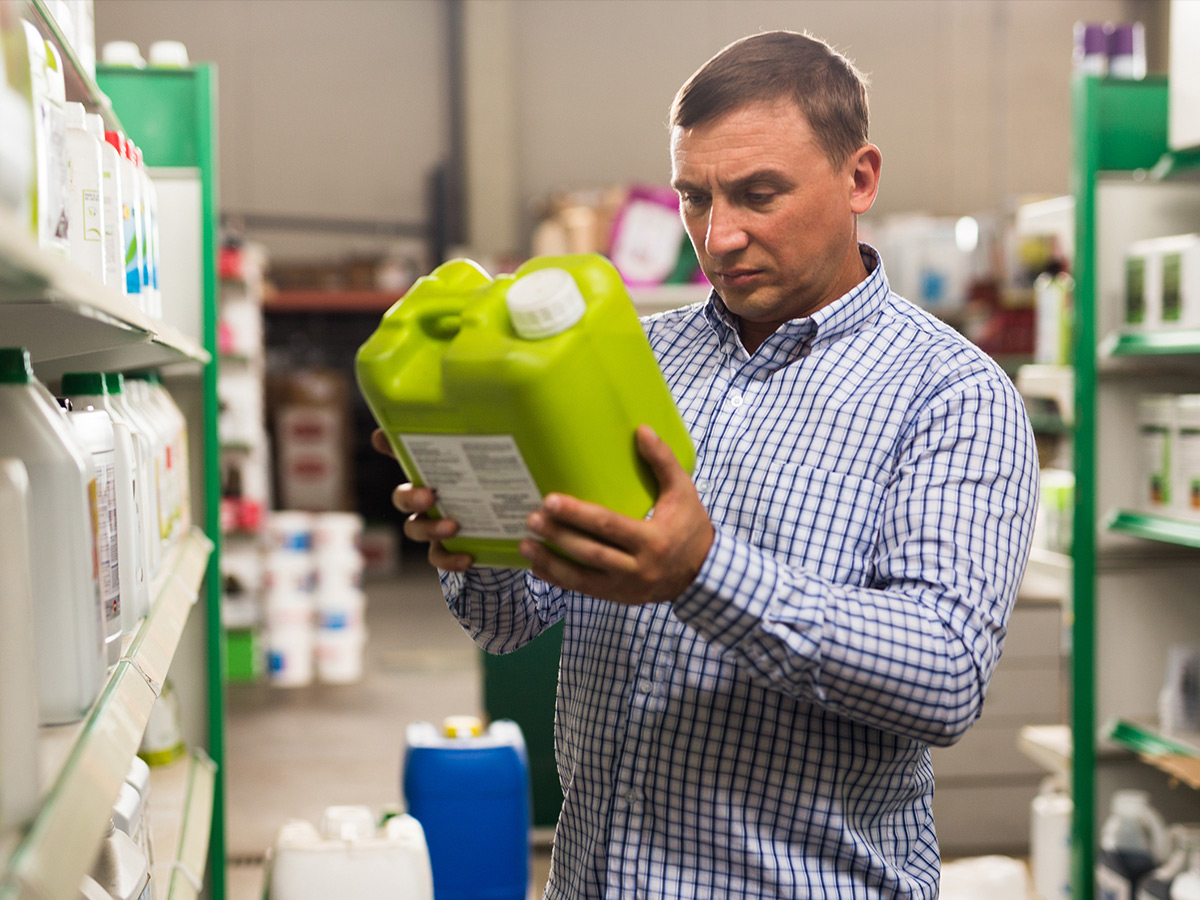
Sales in agriculture still mainly rely on direct contact. This means that the factor of relationships and trust is fundamental to the functioning of the market. This is confirmed by a study conducted by Martin&Jacob using the CAWI method on a sample of N=378 farmers in the period 29.11-12.12.2024 r. As many as 38% respondents point to the store clerk as one of their main sources of information about crop protection products. What's more, for farmers acting „reactively,” that is, looking for a solution when a problem has already appeared in the field, the salesman is the absolute number one - as many as half of them go to him for advice. AI is not (yet) a substitute for a conversation at the counter, an understanding of local specifics and a relationship built up over years. - Credibility and the power of „panto mail”
A farmer is more likely to believe a neighbor who has successfully used a product than the most beautiful advertisement. This is why, according to the aforementioned study, the most reliable sources of information are not manufacturers' websites, but agricultural forums (31%) i other farmers (28%). The opinions of other practitioners are, moreover, the most preferred form of information dissemination – as many as 40% of respondents point to them. Farmers' choice of products is very often based on trust in recommendations, which translates into loyalty to proven brands and solutions. - Tangibility and proof in the field „See, touch, test” – this principle in agriculture never gets old. The farmer must see the results with his own eyes. Hence the enduring popularity of field days, machine demonstrations, or visits to a neighbor’s demonstration field. No virtual model can replace the sight of real farming or the opportunity to test a tractor on your own farm.Only.
- E-commerce is growing, but it is still a margin of sales.
The e-commerce market in agriculture is growing, that is a fact. It enables quick price comparisons and also becomes a powerful negotiating tool when dealing with a local distributor or store. However, it still represents a small percentage of the entire turnover of the industry. agro. In most cases, the final transaction is still finalized in the traditional retail model. The farmer can check the price online, but after consulting and making the final purchase, they increasingly often go to a place where they can talk to a trusted advisor. - Seasonality and the farmer's two modes of operation
In agricultural marketing, we are dealing with two main types of potential buyers. The first is the „Planner,” who gathers knowledge in advance, analyzes and plans purchases. The second is the „Firefighter,” who reacts immediately when a threat arises. Interestingly, the aforementioned study shows that the market is dominated by „Planners” – as many as 72% farmers seek information before a threat arises, while only 28% operate in a reactive mode.. This is crucial strategic information – our communication must be not only reactive (seasonal) but also proactive, building awareness and educating long before the peak of the season. This strengthens the role of content marketing in the marketing toolkit. It also provides an impact for the use of AI in agricultural business.
AI is essential, but must be used wisely
The above points do not mean that artificial intelligence is unnecessary in agricultural marketing. On the contrary – it is absolutely crucial, but its role must be properly understood. Companies that use generic AI tools for mass production of superficial articles fall into a trap. They create content marketing without depth and context that do not build an expert image.
The true value w marketing strategy construction will take place vertical AI agents – specialized, „trained” virtual advisors. This process is a bit like training your own employee:
- Foundation: We rely on a ready-made, generic language model.
- Knowledge Base: „We feed” it with the company's internal, unique data: field test results, product sheets, expert articles, customer inquiry history. This is where AI learns the industry and the specifics of our solutions.
- Context and Personality: We define how the agent is to communicate - whether to ask additional questions to better diagnose the problem, and whether to speak the language of an expert rather than that of a salesman.
Such an agent becomes a powerful tool that „extends the arm” of human advisors. Available 24/7, it can handle many inquiries from farmers on smaller, unvisited farms. It can provide them with precise recommendations, educate and prepare them for the final conversation in the store. The effectiveness of such solutions could translate into increased farmer satisfaction and better customer relations in the future, resulting in increased sales.
Marketing agricultural: the right symbiosis of tradition and technology
The future of agricultural marketing does not lie in extremes. The key is an intelligent hybrid model. Let's use AI to scale expertise and reach a broad, fragmented online market. But let's do so with the full knowledge that the culmination of the sales process and the final decision is still made in the offline world, based on a relationship and trust with a human being.
The best thing that can be done marketing in agriculture Supported by AI, it will make the farmer enter the store better informed, with specific questions and greater confidence. But there, at the counter, that knowledge will still collide with the recommendation of a consultant whom he knows and values for years. And that is beautiful and unchanging in agricultural marketing.
See also:
The context of chatbots and LLM in agro marketingReturn to all entries
More inspiration
The farmer does not just buy the product. How to reduce purchasing risk in agro marketing?
 Read more
One brand, several worlds – why do a manufacturer, a distributor and a farmer see the same product differently?
Read moreThe Ministry is still debating the electronic record of spraying, and farmers are already sowing. Who thought of a field work calendar?
Read moreThe power of habit in farmers’ purchasing decisions – why do we choose what we know?
Read moreMarketing to farmers – 7 mistakes limiting campaign effectiveness
Read moreAI in agricultural marketing. How are farmers' decisions changing?
Read more

We have been connecting agro brands with farmers for over 20 years.
Talk to us about your campaign and start reaching the right audience.
Contact Us