20.03.2020
Beata Gruś
Content marketing in agriculture-what is engaging the farmer today?.
Marketing in the agriculture industry is entering a stage where content is becoming the main tool for building trust and sales. It increasingly relies on data, seasonality and the voice of practitioners - from BBCH messages to farm case studies and advice from agronomists. Agricultural marketing is growing in importance with the development of AI and new content visibility standards (GEO/AEO), which requires material that is credible, citable and easy to find in generative results as well.
In this article, we show you what content marketing is in agribusiness, what trends and challenges are shaping the strategy for the coming seasons, and how to select formats (video, articles, newsletters, tools) to deliver tangible solutions for agricultural producers. You'll find a personas map, principles for creating data-driven content, examples of best practices from the market, and tips on how to leverage SEO/AIO and automation to turn expertise into lasting relationships and measurable results.
What it is content marketing in agribusiness And why is it crucial?
Content marketing in the agricultural industry it's strategy, involving the creation and distribution of valuable, substantial content, aimed at attracting and engaging potential buyers - farmers - by solving their problems and providing expert information. This strategy supports the optimization of agricultural practices by providing insights into the latest information in various areas, such as mechanisms of plant nutrient uptake, improving soil health, protecting crops from diseases and weeds, and feeding technology for dairy cows.
Why content marketing in the agricultural industry Is it necessary today?
Content marketing is one of the most important pillars of modern business strategies in the agricultural sector. Global B2B reports confirm that investments in expert, educational and advisory content translate into increased trust, relationship building and long-term sales results.
Strategic dominance and adaptation in B2B
The agribusiness sector, which falls under the broad category of B2B, is dynamically implementing content marketing strategies, recognizing their lasting value in relationships with farmers and trading partners.
Key data:
- 97% B2B marketers say they have a content marketing strategy in place at their organizations.1
- Over 59% considers its content efforts to be at least „partially effective” (met goals).2
- In companies with budgets exceeding 1 million PLN priority shifts from short-term sales to Long-term building of relationships, expert position and loyalty recipients.3
In practice, this means that content marketing in agriculture is not an add-on to commercial activities, but primarily their strategic core, combining communications, consulting and the brand's technology-expert reputation.
Dynamic market growth
Global market data confirms that content marketing in the agricultural industry is one of the fastest growing channels of investment in B2B communications:
Figures and forecasts:
- The global content marketing market will grow by USD 539.3 million in the years 2025-2029.4
- Estimated Cumulative annual growth rate (CAGR)*. will be 13,9%.5
- The main drivers of this growth are:
- The growing number of social media users,
- automation and integration of artificial intelligence (AI) with the processes of content creation, targeting and distribution.6
For agricultural brands, this means investing in advanced GEO (Generative Engine Optimization) strategies., which increase visibility in generative results (Google SGE, Bing Copilot, ChatGPT Search) and enable AI models to cite content.
The agricultural context and the role of innovation
In agribusiness, content marketing has a function educational, advisory and strategic, bringing together science, practice and farmers' experience. The dynamics of innovation in agricultural production generates a huge demand for reliable sources of knowledge. This is where content becomes the main channel of communication.
How to create valuable content?
Example:
- In the segment agri-input (including humic fertilizers, microbial inoculants) in the region APAC market value is growing by more than 15% per year, and globally by approx. 12% per year.7
- This growth is being driven by the need to increase fertilizer efficiency and improve crop quality - biological solutions (such as humic fertilizers) can increase the assimilation of nutrients by up to 30%.8
The importance of data for content marketing
Content based on statistical data, experimental results, performance analysis and farmers' practical experience becomes not only an educational tool, but also a innovation knowledge transfer channel.
In this way, content marketing in agribusiness supports the transformation of the sector, promoting Sustainable practices, optimizing yields and reducing chemicals, in line with the trends of precision agriculture and the European Green Deal.
To sum up this thread, content marketing in the agricultural industry is no longer an option. It now represents condition of competitiveness agricultural brands that want to maintain the trust and loyalty of their customers.
The key to success is first and foremost Substantive content, research data, authentic farm stories and practitioner opinions, supported by modern AI and SEO tools.
Persona content marketing in agribusiness
The modern farmer is An enterprising, modern traditionalist who actively uses the Internet.
Contrary to stereotypes, farmers are a stable and pragmatic social group in their choices. Active use of mobile technology is widespread. Farmers are using Internet via smartphones, tablets and laptops to efficiently manage the farm, such as through electronic banking, modern software, online applications and other tools.
What style of communication works in agricultural (B2B) advertising?
Communication aimed at farmers falls within the framework of marketing B2B, where they count Hard data, benefit language and solving specific problems.
There is no room for watered-down messages in agricultural marketing. Content creation must focus on providing practical solutions and advice from practitioners, such as how to effectively control field violets in crops or how to choose the right tractor for a farm over 50 hectares.
Content marketing in agriculture - Which tools generate the most engagement?
The most popular tools in agricultural content marketing are. social media, blogs, email marketing and video format.
Articles (published in in-house and third-party media) and blogs are an excellent tool for building relationships between the brand and the audience and for education. The content should be easy to find on Google search, which is achieved by using proper SEO and AIO optimization.
What are examples of good content marketing practices in agribusiness?
Good content marketing practices in agribusiness focus on building authority, providing expertise and leveraging the opinions of farmers themselves.
Examples from the world of agricultural marketing:
| Company/Project (links) | Format | Target | GEO | Why it works - good practice |
| John Deere - The Furrow | Content magazine/portal | Branding, authority building, retention | Global | Evergreen storytelling, zero straight selling, 120+ years of consistency |
| Syngenta - Infopole - Syngenta EN | Advisory service | Education, prevention, loyalty | EN | Agrotechnical messages and threats of agrophages with strong seasonality and localization |
| Josera - „Project Agrar” - JOSERA Agrar (DE) | Blog/guides for breeders | Demand generation, retention | DE/EN | Expert niche guides (cattle nutrition/livestock), data and cases |
| Fertilizers.eu | Knowledge portal + tools | SEO/lead gen, education, maintaining attention | EN | „Hub” thematic producer (owned media) with useful tools and regular updates |
| e-field - Platform • YouTube: epole_kanal | Knowledge platform + YouTube | Consulting, lead generation, community | EN/CEE | Video series with agronomists and farmers, crop regionalization and BBCH schedule, online/offline events. |
| ARvideo - YouTube | Vlog/farm reports, machine tests | Outreach, trust, UGC/testimonials | EN | Authenticity and farmers„ voices; the ”from the field" format builds credibility better than advertising. |
Farmers value the opinion of other farmers, so they testimoniale (product reviews in an accessible form) are the best testimony of quality and effectively form relationships.
How to optimize content for search engines (SEO and AIO) in agriculture?
Search Engine Optimization (SEO), taking into account search phrases and farmers' intentions, should be used to make content effective and easily accessible.
Today, however effective content marketing in agriculture should focus on GEO and AEO, Which require the content to be:
- structurally clear by using headings in the form of questions (AEO) and bulleted lists,
- was based on precise data numerical instead of generalities (e.g., „yield up to 11 t/ha” instead of „high yield”),
- reliable thanks to citing scientific studies, industry reports, expert opinions (agronomists, consultants) and linking to reputable portals,
- complete By discussing the topic extensively,
- ready to respond, that is, a concise, definitive answer should be directly below the headline in the form of a question.
Can artificial intelligence (AI) support the content marketing in agriculture?
Artificial intelligence is becoming an indispensable part of marketing strategies and will increasingly support content marketing in agribusiness in the areas of automation, data analytics and content optimization.
AI tools, such as ChatGPT, can be used to Quickly create drafts of content, rewrite, check grammar and syntax, and do quick research.
In the context of agriculture, AI can support content optimization by suggesting keywords and topics (e.g., using MarketMouse or Contadu tools), based on analysis of user behavior and directed web queries.
Main conclusions
Modern agricultural marketing, especially content marketing, is entering an era of AIO - AI + SEO + UX, where content effectiveness is measured not only by reach, but also by credibility and „citability” by search engines and artificial intelligence models. The farmer as an audience has become both a digital user and a practitioner who expects data from the field, not marketing buzzwords. Today's farmer is looking for specifics in the form of hard data, measurable benefits and feedback from other farmers sharing their knowledge online.
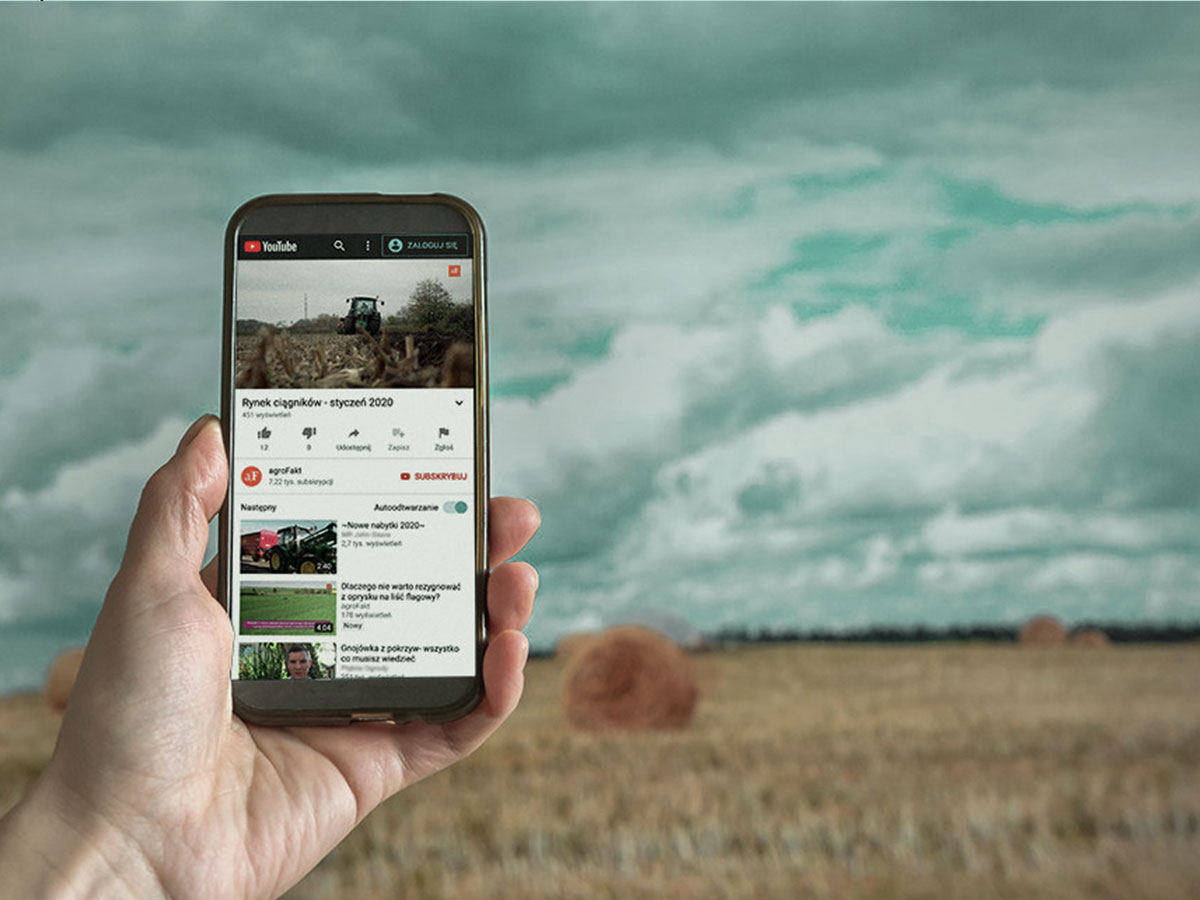
Therefore, modern content strategies in agribusiness must be based on multimedia format. Video is an essential element of effective content today, as it extends user engagement time from an average of 2:05 to 2:55 minutes. This longer attention retention translates into greater trust in the brand and more frequent sharing of the content. Educational videos featuring agronomists, advisors or farmers demonstrating real-world effects of products or technologies work best.
Equally important remains the pillar of reliability (GEO). Any material should refer to research by industry institutions (e.g., COBORU, IOR-PIB, IERiGŻ), include quotes from experts or testimonials from practitioners. The effectiveness of communication is also enhanced by educational services, such as Syngenta Infopoles or John Deere Farmers Academy, combining scientific authority with practical analysis.
In terms of AEO content should be constructed so that AI systems and search engines can easily interpret and cite it. The best practice is to use headings in the form of questions, short definitional answers directly below them, and lists and tables to increase readability. This structure facilitates the appearance of text in zero items (Featured Snippet), modules People Also Ask and in the results AI Overviews.
Ultimately, it GEO + AEO synergy determines the effectiveness of communication in agribusiness. Content that combines substantive depth with numbers, authority quotes and clear structure is human-readable, understandable to algorithms and attractive to AI. Content developed in this way becomes the foundation of an effective agribusiness marketing strategy of the future - one that is consistent, credible and permanently visible in the search ecosystem.
FAQ section: Content marketing in agribusiness
What kind of content is most reliable for farmers?
The content should be expert, based on hard data and targeted at solution to a specific problem. Farmers also value the opinions of other farmers and industry recommendations, which is why the so-called testimoniale.
Check out 5 content ideas to attract farmers.
Is content marketing still dominant in agricultural marketing?
Yes. The popularity of content marketing in the B2B sector remains very high.
What are the most commonly used formats in content marketing?
The most commonly used formats include video and native articles. Video is considered most efficient format.
What is GEO (Generative Engine Optimization) and why is it important in agricultural content?
GEO are principles of content creation that are reliable, complete and source. The goal here is for artificial intelligence (e.g. Google SGE, Bing Copilot) to be able to cite this material as a expert source. Among other things, it requires citing scientific studies, experts (e.g., agronomists) and providing precise statistics and unique data.
What is AEO's key quality indicator for text and video content?
Key qualitative indicators are:
- for textual content - reading the article to the end (English. Read-through rate),
- for video content - Completion Rate (completion rate), which is the percentage of users who watched the video to the end.
Do large companies with the highest budgets focus on generating leads?
Not. Organizations with the largest budgets (above PLN 1 million) on content marketing focus on optimization of interaction i long-term relationship building with customers. Lead generation and sales play a marginal role in their strategies.
Will AI replace content creators in agriculture?
Not. Although many marketers uses AI-based applications, and tools such as ChatGPT are being used to Quickly create sketches, edit and research, it is AI that is designed to help marketers „write faster, not think better”.”. Human supervision and human creativity are still key to the authenticity of the content.
What is a Super User (SU) and why are companies willing to pay more for it?
Super User (SU) is a qualitative indicator denoting a user who consumes the content in its entirety (reads or watches to the end). Companies are willing to pay more for this guaranteed attention effect (Attention Economy), because SU proves the real commitment and is the best measure of content value.
* Cumulative annual growth rate (CAGR) - is an indicator that shows how, on average, the value of a given investment, market or phenomenon grows annually over a specified period of time, assuming that the profit from each year is reinvested (i.e., growth works „on a compound basis”).
Sources:
- 1,2 Content Marketing Institute. B2B Content Marketing Trends. Insight for 2026
- 3 Content Markting Association Poland – Market condition content marketing In Poland Summary of survey results 2024 Trends 2025
https://scmp.pl/wp-content/uploads/2025/05/Raport-Kondycja-Content-Marketingu-2025.pdf
- 4,5,6,7,8 Technavio - Content Marketing Market Analysis, Size, and Forecast 2025-2029
https://www.technavio.com/report/content-marketing-market-size-industry-analysis
Return to all entriesMore inspiration
Why Invest in Collaboration with Agricultural Industry Experts in Marketing?
 Read more
Remarketing campaigns in the agricultural industry – how to effectively remind farmers about yourself?
Read moreTechnical SEO for AI Search in Agriculture. What must a website have to win in Google, Discover, and AI Overviews?
Read moreKnowledge Architecture in Agriculture: How AI Systems Are Changing the Agrotechnical Consulting Model
Read moreBrand positioning in agribusiness. How to find a Unique Value Proposition (UVP) and break free from price wars?
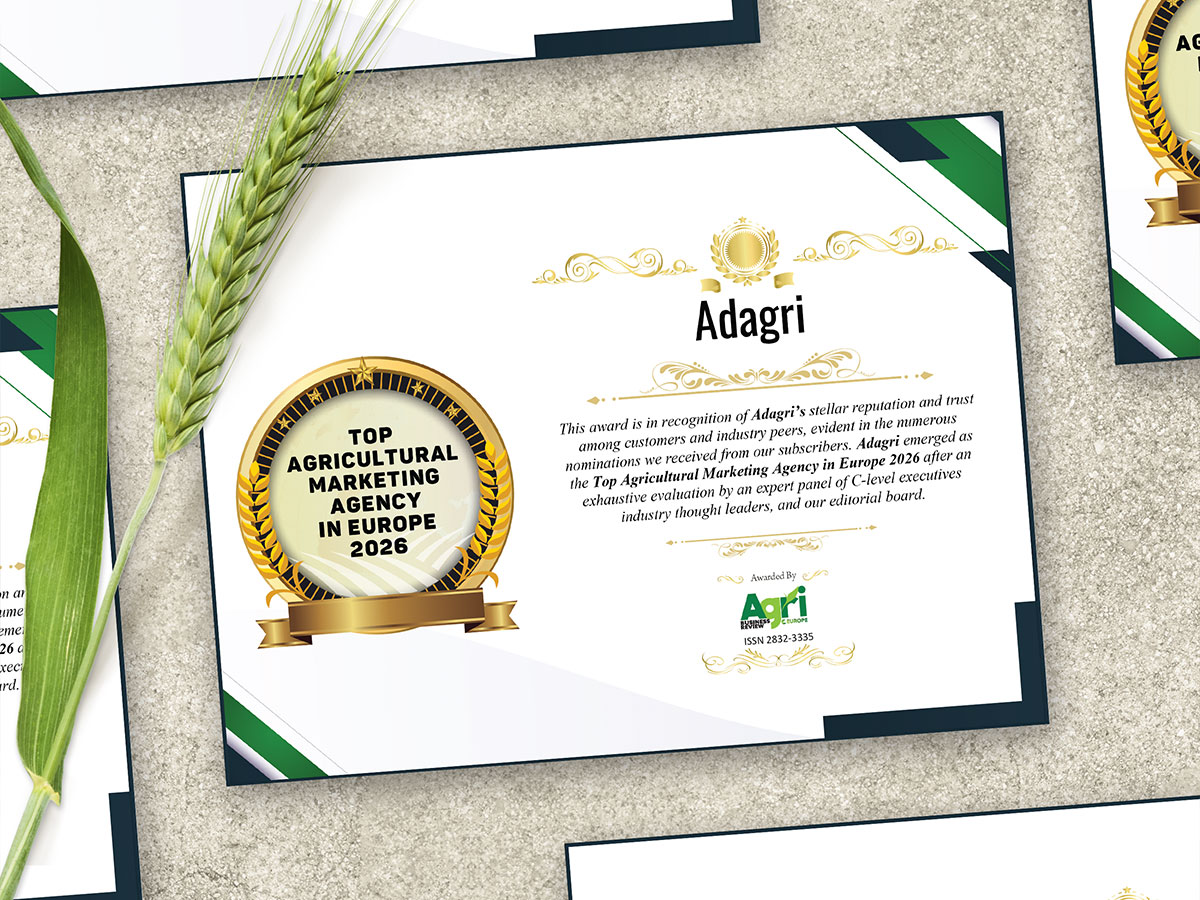
Read moreAdagri with the prestigious title „Top Agricultural Marketing Agency in Europe 2026” – a new era of precision communication
Read more





We have been connecting agro brands with farmers for over 20 years.
Talk to us about your campaign and start reaching the right audience.
Contact Us