19.11.2026
Magdalena Cieslikiewicz
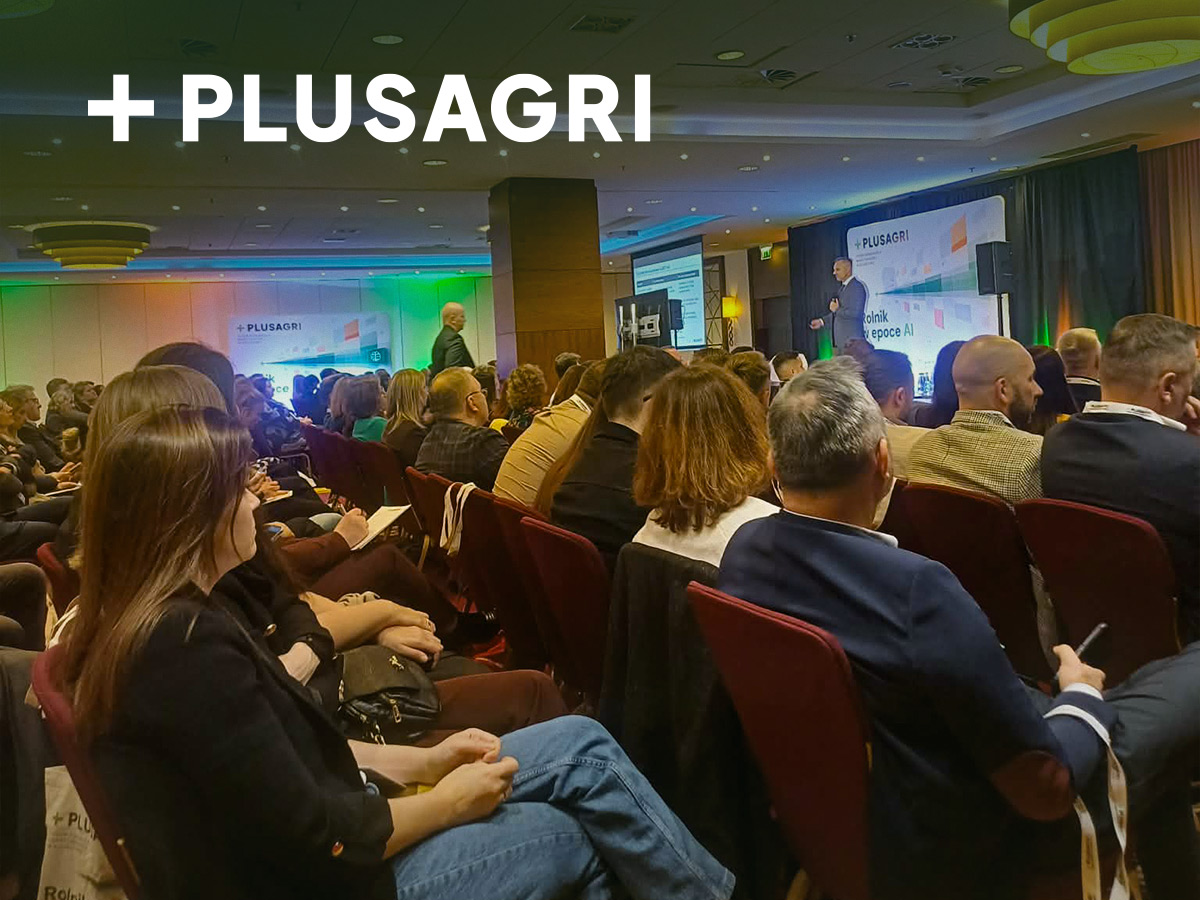
Have algorithms and AI just entered into the relationship between your brand and the farm? PLUSAGRI 2026
53.9% of Polish farmers are already using AI tools in farm-related matters, and 63.1% of them compare products in this way. A new intermediary has emerged between the brand and the customer. For teams responsible for agro marketing, the situation is simple: the battle for attention and purchasing decision-making begins today in the chat window, long before calling the field advisor.
How to organize activities in the new reality? On November 18, 2026, the PLUSAGRI 2026 marketing conference („The Farmer in the Age of AI”) was held at the Warsaw Presidential Hotel, organized by Adagri and Martin&Jacob. Among the practitioners and marketers of the agricultural industry, we looked at this challenge holistically. We combined global technological forecasts with hard data on the behavior of Polish farmers, and then translated them into everyday realities: the fight against algorithm campaigns for visibility, precise budget planning, and building what is most important in agriculture – human trust.
See what conclusions and data we have drawn from this year’s edition of the forum and what they mean for agricultural marketing in the upcoming season.
How do AI and new technologies change agriculture and agro marketing?
To plan communication in the agricultural industry well, you first need to understand how technology is changing the way we work and think. It’s not just about new applications; it’s about a fundamental change in the relationship between humans and machines.
Opening the academic session, Jowita Michalska, in her presentation „How AI and new technologies are changing the world,” drew attention to the crucial moment we are in today. Today’s artificial intelligence understands context, possesses knowledge, perceives its surroundings, and is able to independently perform specific tasks – increasingly often in the form of so-called AI embodied, present in the physical world. The scale of this change will grow rapidly. Forecasts for 2030 show that artificial intelligence could take over up to half of the tasks associated with farm management – from simple operational activities to production planning. Technology already has enormous potential, but by itself it will not solve the strategy or relationships for us.
So how can we find our way in this reality wisely and build an advantage instead of giving the field to algorithms? Jowita Michalska pointed out specific things that leaders and teams need to work on today:
- Let’s arouse curiosity and creativity. Algorithms excel at processing existing patterns, but the human ability to „connect the dots” – to find the hidden connections between trends, the needs of households, and brand communication – creates an advantage.
- Let’s experiment and adapt continuously. The mere awareness that new tools exist does not change anything. Organizations that regularly test solutions in practice, quickly draw conclusions and adjust their way of working win out.
- Let’s focus on cooperation and human empathy. The more tasks are taken over by automation, the more valuable becomes true cooperation between people and the empathetic understanding of the emotions, concerns, and realities of the other person’s work.
- Let us exercise quick, critical judgment. Unreflexive reliance on the suggestions of algorithms carries real risks: our own competencies simply become diminished if we use AI without thinking. The key becomes the ability to quickly assess whether the result generated by the model makes sense and has value.
- Let us analyze instead of accepting it uncritically. Artificial intelligence provides the raw material and starting points, but it is up to the human side to perform the deep analysis of the context, market data, and the consequences of the decisions taken.
What does this change in the work of departments responsible for agricultural marketing? The priorities of the farmer himself are changing. The „innovative product” label itself is becoming increasingly less important. What matters are the cost-effectiveness of investments, time savings, precision in operations, and hard data. If an agro brand is unable to clearly demonstrate what specific problem in the field its product solves and how that translates into financial results, it is already losing at the outset. At the same time, access to these same AI models will soon level the technological playing field in the market – therefore, who wins the audience’s attention will be determined by the quality of the team’s thinking: a combination of systematic experimentation with critical judgment, analytics, and authentic empathy.
What is the biggest challenge today in effectively reaching the farmer?
Over the past few months, two extreme theories have circulated in the industry. Some in the market assumed that the AI revolution would bypass rural Poland, while others predicted the immediate end of traditional sales. During PLUSAGRI 2026, we checked how it really is.
Marcin Chrobot from Martin&Jacob presented the preliminary results of COMDEX 2026 (Communication & Decision Index) – the first study in Poland examining how farmers seek information and make decisions in the era of artificial intelligence. The project combined three sources: declarations from 401 farmers, a semantic analysis of 20,170 posts from the agricultural forum, and in-depth interviews with 8 farm owners.
The figures from the report give a very sober picture of the market: 53.9% of surveyed farmers use AI in matters related to running a farm.
The conclusions are unequivocal. Farmers are using AI more boldly, but they do not trust it unconditionally. They treat it as a quick preliminary filter and a convenient tool for organizing the subject matter.
Among farmers using AI, the main applications are as follows:
- 79,3% uses it to search for information,
- 63,1% uses it to compare available products,
- 51,2% he uses it to identify problems in the farm.
Nevertheless, traditional sources of knowledge still hold strong. The answers generated by the algorithm are confronted by farmers and proven places on the web. Before making important decisions regarding the purchase of agricultural production inputs, they turn to:
- Google search engine (51,3%),
- experiences of other farmers (30,1%),
- field and commercial advisors (28,7%),
- agricultural forums (20,4%).
And here comes the biggest problem for marketers and retailers. Since 63.1% of farmers using AI compile competitive offers using it and then verify them on Google, advisors and forums, the old, linear sales funnel stops working.
When product information is scattered, general information is difficult to compare, and the brand is already discarded during the first chat request. Algorithms match specific parameters and opinions – that’s why the quality of product data and the substantive reliability are what determine whether a company will even be on the shortlist today.
Will AI and better data solve the problem of access? Voices from the room
With algorithms entering the buying process, how should marketing departments react? Is better analytics and campaign automation enough? We asked the practitioners present in the room, who are responsible for communication for leading agro brands on a daily basis.
Leszek Chwalisz from Hazera Polska drew attention to the dilemma that companies will face in the next five years. The development of AI offers enormous opportunities in data analysis, message personalization, and a better understanding of the needs of specific farms. At the same time, it also poses serious risks: how to implement automation so that along the way we do not lose what is most important in our relationships with farmers – credibility, trust, and the practical value of information.
One of the participants expressed herself in a similar tone, summarizing the most important lesson from the conference:
„The thought that will stay with me longer after today’s conference is particularly close to my heart. Let’s use the available AI tools because they make our daily work in marketing easier. However, let’s remember to communicate with farmers in person first and foremost. This will preserve the authenticity of the brand and create a message that not only effectively reaches the audience but is also consistent with our values and translates into concrete results.”
— Dorota Stosik, Unia Group Sp. z o.o.
Conversations with participants revealed a consistent picture. Data and artificial intelligence are excellent at solving the problem of reaching the target audience precisely – they help tailor the message to the scale of the farm, the production profile, and the season. However, they will not replace normal, human language, the advisor’s experience, or the consistent brand values.
AI speeds up the work of a marketer, but it is authenticity that makes the farmer return to the company in the next season.
What are we coming back with from PLUSAGRI 2026? Three things worth starting with before the season
Thank you to all the guests who met us in Warsaw on November 18th. Your presence, questions from the audience, and open discussions in the backstage showed how much our industry needs substantive meetings based on research and practice, not marketing slogans.
As we close this year’s edition of PLUSAGRI 2026, we leave behind three concrete things worth starting the preparations for before the next season:
- Standardize product data. Since most farmers who use AI compare offers, descriptions, and product specifications using it, the products must be specific, measurable, and easy to compare both by algorithms and by humans.
- Speak in terms of benefits and results. The very label of modernity no longer convinces anyone. It shows real time savings, precision in the procedure, and the impact of investments on the profitability of the farm.
- Automate the background, not the relationships. Use AI to analyze data and improve the daily work of the team, but the communication with the farmer itself relies on credibility, a human tone, and advisory support.
To organize the most important information and data, we are compiling the essence of the event into a one-stop knowledge hub – with the conclusions from the presentations and selected data from the COMDEX 2026 report. We will provide details on how to download it soon via email and on our profile. Adagri on LinkedIn. Take a look there right now and leave your thoughts in the comments after this year's lectures.
Link to Adagri profile: https://www.linkedin.com/company/adagri-marketing-rolniczy/
Return to all entriesMore inspiration
The farmer does not just buy the product. How to reduce purchasing risk in agro marketing?
 Read more
One brand, several worlds – why do a manufacturer, a distributor and a farmer see the same product differently?
Read moreThe Ministry is still debating the electronic record of spraying, and farmers are already sowing. Who thought of a field work calendar?
Read moreThe power of habit in farmers’ purchasing decisions – why do we choose what we know?
Read moreMarketing to farmers – 7 mistakes limiting campaign effectiveness
Read moreAI in agricultural marketing. How are farmers' decisions changing?
Read more

We have been connecting agro brands with farmers for over 20 years.
Talk to us about your campaign and start reaching the right audience.
Contact Us