08.01.2026
Jacek Skowronski
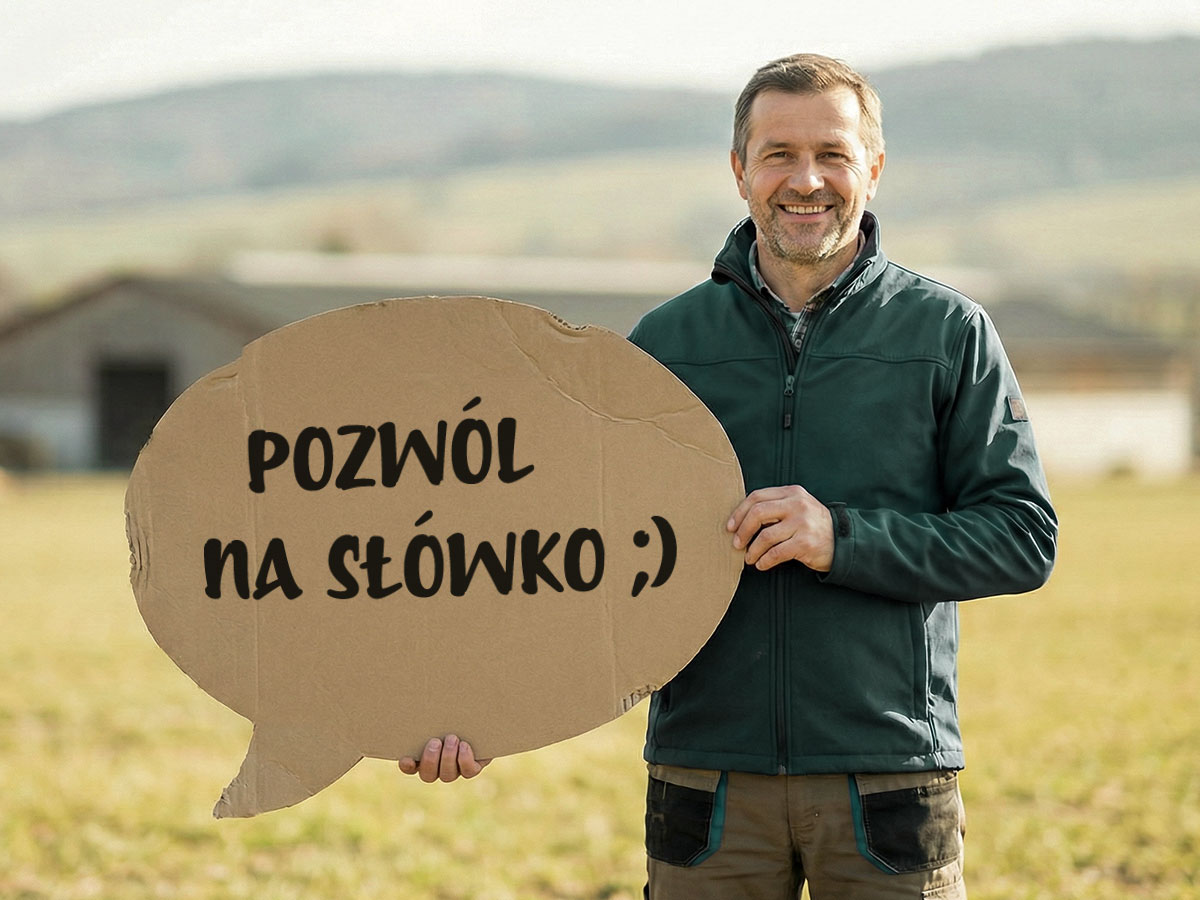
Context of chatbots and LLM in agro marketing.
The integration of LLM models with customer service is one of the most important digital trends of recent years, which is gaining particular importance in the Polish agriculture industry. Modern chatbots are already capable not only of answering questions, but also of analyzing the context of the conversation and integrating with the company's own data, creating an „intelligent contact layer.” However, the implementation of such a solution, while promising, requires a conscious approach to data quality and technology costs.
Chatbots and LLM models as marketing interfaces
Over the past two years, chatbots in agriculture based on large language models (LLM - Large Language Models), such as OpenAI GPT, Anthropic Claude, Mistral and LLaMA, have begun to play an increasingly important role. The technology is no longer just a simple tool for automated responses - it is becoming a full-fledged communication channel between the company and the farmer, available 24/7, able to adapt to the tone of the brand, and, in the future, to analyze industry and operational data.
In practice, chatbot in agriculture is gaining the status of a new marketing front, integrating key functions:
- education and product consulting,
- after-sales service and technical support,
- Generate leads and identify purchase intentions.
A farmer can inquire both about fertilization rules, crop protection product selection, subsidy issues and the parameters of a new sprayer. The model not only provides an answer, but also classifies the type of inquiry, processes it for purchasing needs, and transfers the relevant data to the CRM system.
For companies operating in the agro industry, it is a simple yet extremely effective way to be closer to the end user, systematically gather knowledge about their needs and behaviors, and direct conversations to the right sales and advisory channels. Chatbot in agriculture thus becomes a tool to support both the development of relationships with farmers and the optimization of marketing and sales processes along the entire value chain.
What are the advantages of using LLM models and chatbots In agriculture?
The introduction of chatbots based on large language models in the agro sector opens a new chapter in the way companies and farmers communicate. The agribusiness industry, which is increasingly digitizing its advisory, sales and service processes, is gaining a tool that allows it to automate many stages of customer contact without sacrificing content quality. The following are the key benefits that the technology brings to the marketing and operational activities of agro companies:
- Rapid deployment as an interaction tool
LLM-based chatbots can be deployed relatively quickly as first-line support to the farmer - both for basic agronomic advice and after-sales service. - A new source of purchase intentions
The model can act as a „gateway” for generating leads - the farmer asks a question, the chatbot provides an answer, suggests a suitable product or service, and collects contact information for further sales service, with the user's consent, of course. - Integration with CRM / CDP and marketing campaigns.
A chatbot can act as part of a larger data ecosystem. Integration with a CRM or CDP platform allows for automatic follow-up routing, call segmentation, and fast forwarding of a contact to a live consultant when an inquiry requires expert intervention.
In conclusion, chatbots in agriculture using LLM models are becoming a tool for agribusinesses to not only improve service and advice, but also to realistically increase sales potential and improve the quality of data used in marketing activities. Their implementation makes it possible to scale contact with farmers and build a cohesive, modern communications ecosystem that supports the brand at every stage of the customer relationship.
Limitations and barriers to the use of chatbots in agriculture
While LLM-based chatbots in agriculture offer significant opportunities, in the agro sector their implementation also comes with a number of challenges. Agriculture is an industry that requires a high degree of precision, based on up-to-date agronomic knowledge, local conditions and responsible technological decisions. Therefore, before companies decide to fully exploit the potential of LLM, they must consider the limitations of this technology and the costs of adapting it effectively to the specifics of the agricultural market.
- General models that require precise targeting
Standard LLMs are not natively specialized in agricultural topics. Fine-tuning, careful design of prompts and content control systems are required to ensure high quality responses. - Cost of maintenance and personalization
While the basic model can be „rented” as a service, building a version dedicated to the agro sector - updated, powered by operational data and tailored to the specifics of the company - requires both capital and technical competence. Commercial models (e.g., GPT-4, Claude 3.5, Mistral Large) are billed on a per token basis, which can generate significant costs when traffic volumes are high. - Limited effectiveness without access to proprietary data
Without the inclusion of unique data - such as information about farms, contact history or user activity - the chatbot provides answers that are more general and subject to the risk of errors. In agriculture, where the recommendation is often about fertilization, crop protection or machinery specifications, any error reduces trust in the brand. - High threshold for long-term development
In order for the chatbot to operate at an expert level, so-called "follow-up training" and regular updates based on new data are required. This is a costly, programmatically demanding process, yet crucial to maintaining the technological edge and quality of communication with the farmer.
Ultimately, while LLM chatbots represent a promising development tool for agro companies, their full utilization requires a conscious approach: investment in data, competence and continuous improvement of models. Only by combining technology with expertise and the right infrastructure can risks be fully minimized and a viable business outcome - stable, scalable and in line with farmers' needs - be achieved.
Why the use of chatbots and LLM models in the Polish agro industry make sense?
The Polish agricultural market is characterized by a wide variety of farms, a high rate of digitization and a growing need for quick access to information. Under such conditions, LLM-based chatbots in agriculture can be a real competitive advantage, especially for medium- and large-sized agro companies. The key, however, is their integration with local, proprietary data, such as:
- cookies and user profiles from agricultural portals,
- CRM data and market research results,
- Survey responses and behavioral segmentation.
In such a model, a chatbot in agriculture ceases to be just a „chat machine.” It becomes an intelligent layer of contact that, over time, learns farmers' behavior: it recognizes their type, their needs, their phase in the buying process, and then directs them to the right content, tools or directly to the merchant.
This is an example of a practical application of artificial intelligence in agro marketing that does not require a company to make a gigantic infrastructure investment. Combined with the company's own media - industry portals, newsletters, training platforms or consulting applications - the chatbot creates a cohesive local data ecosystem. Such a system can realistically support sales, improve service quality and build long-term relationships with Polish farmers.
Conclusions and recommendations
LLM-based chatbots in agriculture are effectively the first mature step towards interactive marketing using artificial intelligence in the agro brand strategy. Importantly, they do not require building their own AI model from scratch, which significantly lowers the entry threshold. At the same time, they allow companies to:
- Observe user behavior and analyze their needs,
- Collect data on purchasing intentions and decision-making processes,
- deliver valuable, personalized communication in real time.
Combining artificial intelligence with conversational marketing - especially when enhanced with local data and integrated with the CRM ecosystem and proprietary media - could become a key component of modern „AI supply chain marketing” in the Polish agro sector.
Companies that start this process now will gain an advantage not only in terms of communication, but also in data quality, responsiveness and operational efficiency of the entire sales process.
Read also what is green marketing in agriculture!
Return to all entriesMore inspiration
PLUSAGRI 2026 Agricultural Marketing Conference – why communicating with a farmer requires a new approach today?
 Read more
Brand or price? What sells tractors in an era of tightening belts?
Read moreChatGPT Ads are now in Europe. Are ads in ChatGPT available for the agricultural sector?
Read moreSustainable agriculture as a source of competitive advantage in agribusiness
Read moreWhy Invest in Collaboration with Agricultural Industry Experts in Marketing?
Read moreRemarketing campaigns in the agricultural industry – how to effectively remind farmers about yourself?
Read more






We have been connecting agro brands with farmers for over 20 years.
Talk to us about your campaign and start reaching the right audience.
Contact Us